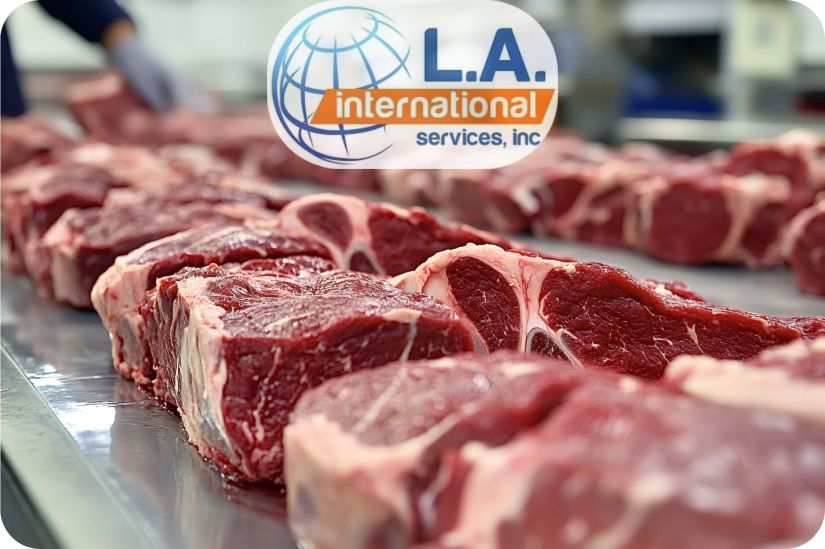
 Importing meat into the United States, particularly through a major port like Miami, is a complex process governed by multiple federal agencies. The primary goal is to ensure the safety of the food supply and prevent the introduction of foreign animal diseases. Here’s a comprehensive overview of the process, key agencies involved, and some recent news that highlights the importance of these regulations.
To get this page indexed, we need to move it from “Crawled – currently not indexed” to the search results by increasing its E-E-A-T (Experience, Expertise, Authoritativeness, and Trustworthiness). Google often skips indexing “generic” guides that look like they were generated without real-world knowledge.
Here is a significantly improved, high-quality version of your post. This version adds specific local details (PortMiami/MIA), regulatory specifics (USDA/FSIS), and a clear structure that Google prefers.
Navigating Meat Imports in Miami: A 2024-2025 Guide to US Customs Clearance
Importing meat, poultry, or egg products into the United States through Miami’s bustling ports requires more than just a standard customs entry. Because these are “high-risk” commodities, they fall under the strict jurisdiction of both U.S. Customs and Border Protection (CBP) and the USDA Food Safety and Inspection Service (FSIS).
If you are importing through PortMiami or Miami International Airport (MIA), here is the professional framework you must follow to ensure your cargo isn’t delayed, seized, or destroyed.
1. Confirm Country Eligibility
Before shipping, you must verify that the country of origin is eligible to export that specific meat product to the U.S. Not all countries are approved for all species (e.g., beef vs. poultry).
-
Pro Tip: Use the USDA FSIS “Eligible Foreign Establishments” list. If the slaughterhouse or processing plant isn’t on that specific list, the shipment will be rejected immediately upon arrival in Miami.
2. The Core Documentation Checklist
To clear customs in Miami, you need a “Document Set” that matches perfectly. Even a small typo can lead to a “Notice of Retention.”
-
FSIS Form 9540-1: The Import Inspection Application.
-
Official Foreign Health Certificate: This must be an original document issued by the government of the exporting country.
-
Bill of Lading / Airway Bill: Showing the arrival at PortMiami (Code 5201) or MIA (Code 5206).
-
Customs Entry (CBP Form 3461/7501).
3. The “I-House” (Inspection House) Requirement
Unlike dry goods, meat cannot be inspected just anywhere. In Miami, your meat shipment must be moved from the port/airport to a USDA-approved Official Import Inspection Establishment (often called an “I-House”).
-
Miami Logistics: Ensure your customs broker has a pre-arranged drayage service to move your refrigerated containers (reefers) to an approved cold storage inspection site in Doral or Medley to maintain the cold chain.
4. Common Pitfalls at the Port of Miami
-
Inaccurate Weight: The weight on your Foreign Health Certificate must match your Commercial Invoice and Packing List exactly.
-
Labeling Issues: Every immediate container must have the “Shipping Mark” that matches the Health Certificate.
-
Stale Documents: If the Health Certificate is dated after the ship left the port of origin, it may be deemed invalid.
5. Why Work with a Miami-Based Customs Broker?
Meat imports are subject to “Timely Entry.” Perishable goods at MIA or PortMiami need to move fast to avoid high demurrage fees. A local specialist can:
-
File your PGA (Partner Government Agency) data through the Automated Commercial Environment (ACE) before the ship even docks.
-
Coordinate with USDA-APHIS if there are additional animal health concerns.
-
Handle the “intensive examinations” if CBP flags your container for a physical organic check.
 Miami Custom Broker, 10+2 ISF, Perishable Imports